Singer · Songwriter · Piano
7Sven
The beauty of noticing the moment just before it disappears.
Songs written at the piano in Southern Germany. Jazz-leaning pop with a warm, unhurried pulse, built on the album music of the 1970s and a weakness for arrangements that take their time.

But Live It
Album · 2026
Imagine a frame
before the story begins
A quiet room, a shifting light, a breath held just long enough for the world to rearrange itself. These songs move through moments like scenes: a glance that lingers too long, a street at dusk, a thought that arrives uninvited and stays. They follow characters caught between steps, standing on thresholds, listening for something they can't quite name.
Albums & EPs
2022 — 2026
Outsiders
To Lose It All

21 E.P.

July Wind
Singles
12 singles since 2023- What You're Gonna DoSep 2025Play
- Anorexic MindAug 2025Play
- RoutineJul 2025Play
- Now and ThenJun 2025Play
- SnowmanMay 2025Play
- ShineApr 2025Play
- PreciousMar 2025Play
- The Days They Meet At MidnightOct 2024Play
- Sometimes It Is EasyOct 2023Play
- To Lose It AllJul 2023Play
- Standing In LineMay 2023Play
- Something NewMay 2023Play
Behind the songs
Where they came fromRoutine2025
“Is it all for sale…”
Routine was written in a moment when the world felt morally unsteady. A political event that shook many people left me wondering how we're supposed to return to our everyday lives when something fundamental seems to have shifted. How do we step back into our routines when everything feels wrong and yet continues as if nothing happened?
The song carries anger, exhaustion, and a deep longing for clarity. It asks what becomes of a society when truth feels negotiable and power casts a long shadow over the common good. And still, there is a spark of hope. A quiet resistance against resignation. A reminder that we are not small — that we still have the ability to shape who we are and how we live.
For me, Routine is a song about holding on to humanity in the noise. About moving forward even when you feel the urge to stop. About the question of how much we can lose before we lose ourselves.
Anorexic Mind2025
“Steppin' in the light…”
Anorexic Mind began with the image of a cliff diver standing high above a deep blue surface — suspended in a moment that is both terrifying and strangely pure. Just before the jump, thoughts rush through him in a way that feels random and ancient at the same time, as if something inside him is speaking with unusual clarity.
Up there, in that thin air where the world becomes distant, something opens. The noise fades. The self becomes sharper. The moment becomes alive.
The song tries to capture that fragile threshold: the second before everything changes, the breath before surrender, the strange stillness in which you feel the world returning to you from within. It's a song about falling without fear. About trusting the unknown. About the quiet truth that your time — your presence — is the only treasure you carry with you when you leap.
The Days They Meet At Midnight2024
“How can this day be saved…”
The Days They Meet At Midnight was born from watching a river near my home, a quiet, constant movement that continues through every season. Leaves fall, snow melts, storms pass, and yet the river never stops, never freezes, never holds on. It simply carries what arrives and lets it go again.
Our thoughts behave in much the same way. Impressions drift through the mind in an endless current: bright, dark, tender, frightening, absurd, comforting. They appear, dissolve, return, disappear. In Buddhism you learn not to be swept away by this river, but to watch it, to let it flow without clinging.
This song tries to capture that feeling. The beauty of days that pass. The tenderness of moments that don't last. It's a reminder that transience is not a flaw in life, but its quiet pulse. You don't love these days despite their fleeting nature, you love them because of it.
My Beautiful Nightmare2024
Musically this one is more jazz-rock oriented and harmonically more complex, but it also has a very warm and romantic feel to it, with a little more edge.
Do you like your nightmares? Probably not — but what if they return again and again and start to feel like an old acquaintance, and after some years even like a friend?
Mirror In The Sky2024
Written in the morning after one of my crazy “final negotiations” in a hotel in Munich. It is supposed to capture that crazy and exhausted mixture of feelings after the event. It is always weird and inhuman, mixed with a feeling of “we against the world”, which I of course somehow do love.
Are You Serious2024
This song was written out of anger about a society that rewards being egoistic and not caring for other people who might need help.
Musically it is quite sparse but with a catchy hookline: a restrained mixture of an acoustic guitar with heartfelt lyrics and a synthesizer, which in the end gets a little emphatic. It could all be so easy, come on…
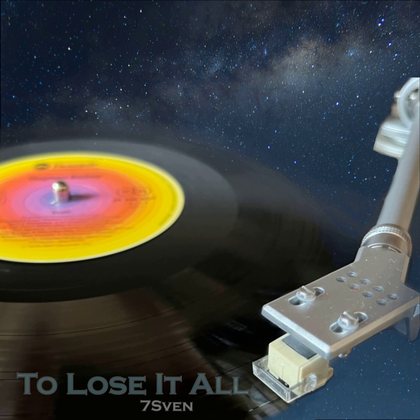
To Lose It All2023
Being in love is the only thing that counts. Even in the very final moments of a love affair, when both know it's over. During that one final try and that one final kiss, the world loses its shape once more and there's nothing else for a second — before they lose it all. That is the emotion I wanted to can in this song.
It's just two guitars, keyboard, bass and drums; on the surface a pretty simple arrangement, but with some hidden complex undercurrents. It is supposed to creep into you like a novel that's easy to read but afterwards keeps buzzing around somewhere in the back of your mind. The song was written and recorded very fast. It had to get out somehow.
World Outside2003
Written in 2003, this song is about working in a company where you give a part of yourself away when you enter the office — and try to get it back when you leave.
Over the River1995
Written around 1995 or 1996, this song deals with misty dreams about an unclear future. It is a typical student's lament about things you have and haven't, both melancholy and hopeful at the same time.
Press
Selected notices“Music for grown-ups. Sincerity without sentimentality, introspection without navel-gazing. It's gorgeous, thoughtful, and utterly unfashionable.”Indie Dock Music Blog, January 2026on “But Live It”
“The kind of album that lingers, built on emotional clarity, subtlety, and genuine songwriting.”The Cage, January 2026on “But Live It”
Interviews
Pigeon Opinion, February 2026 — on the album, the 1970s and why a hook is a door for the listener.
The Cage, September 2025 — on “Anorexic Mind”, reduction, and writing without a plan.
About
7Sven is Sven SchaderBorn and raised in different parts of Southern Germany. Fell in love with music early and started playing the piano at nine. Fell in love with family and with life in general somewhat later.
The songs come out of that order of things. They are written at the piano, recorded close to home, and arranged with more care than hurry: two guitars, keys, bass, drums, and a vocal line that would rather lean in than shout. Simple on the surface, with something moving underneath — the kind of record that is easy to put on and hard to put away.
Since 2022 the releases have come steadily: four albums, an EP, a long run of singles, and a collaboration with Beachhouse Poets. Reviewers have filed the music under jazz, soft rock, bossa, singer-songwriter and quiet storm, which is roughly right in all five directions at once.
Listen & follow
Buy the music
New releases land on Bandcamp first. It is the one place where buying a record actually supports the person who made it.
Stream & watch
Elsewhere
Contact
Bookings, licensing, hello
svenschader@gmail.com
Write in German or English. Press photos and a short bio on request.